

Another Birth
Forough Farrokhzad, messy girlhoods, and Epstein's emails.


At the start of my junior year of college, I was trying to pick my classes for the fall semester. An older girl I knew—who had flawlessly navigated our university—gave me some advice. “You have to take a class in Persian poetry in translation,” she told me firmly. I probably couldn’t have even identified Iran on a map at that time, yet I was intrigued. I asked why. Because of the professor, my friend explained. She is amazing.
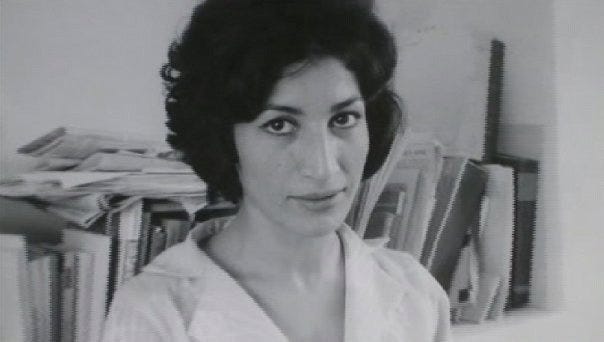
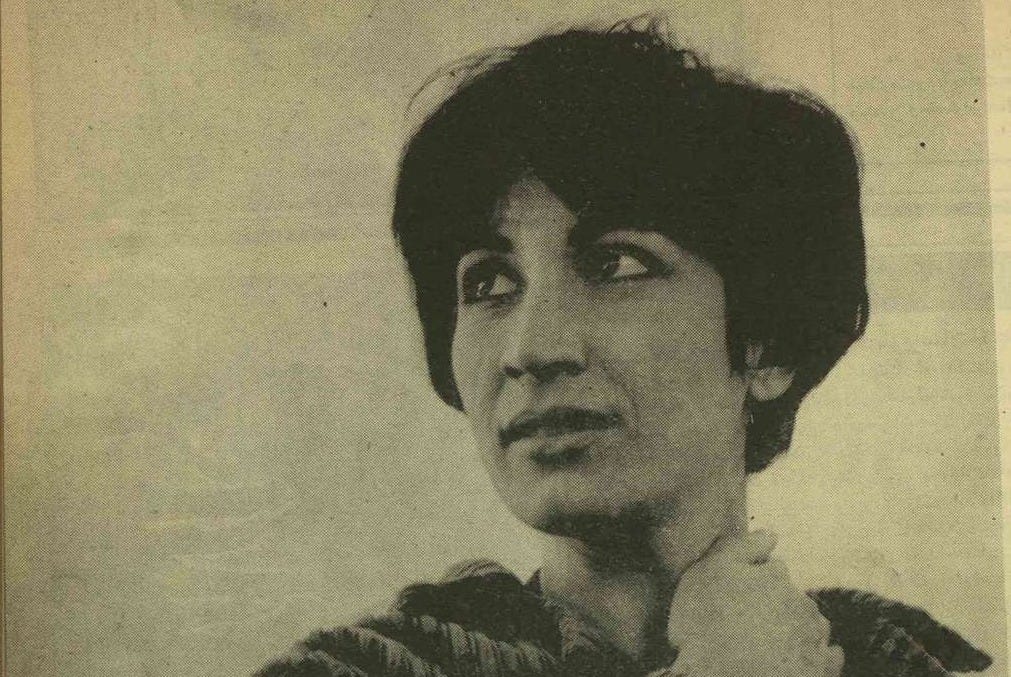
The professor was Dr. Farzaneh Milani, who by the time I graduated became the chair of the Middle Eastern Studies department at the University of Virginia. Professor Milani, I was given to understand by my friend, was the world’s foremost expert on the life and work of Forough Farrokhzad, an iconic 20th-century modernist poet from Iran. Forough Farrokhzad had died an untimely death in a car crash at age 32 in 1967, but in her short life she had become a major disruptor in Iran’s cultural landscape and she left a lasting legacy in her wake.
I signed up for a seminar focused specifically upon Forough Farrokhzad’s life and work with Professor Milani, and I showed up at the start of the course unsure of what to expect. The class seemed narrowly focused and I didn’t consider myself a “poetry person,” but I had learned that there was a reason for the famous adage, “Take the professor, not the class,” so I was open to the experience.
And truly, this class changed my life. The professor was one of the most elegant and beautiful women I had ever beheld. She would walk into the room at the start of the class and proceed to take us through Forough Farrokhzad’s literary output through the prisms of literature, history, cultural theory, and film. Professor Milani’s was the only college class in which I ever remember learning about major 20th-century social theorists such as Michel Foucault, whose work I later read in graduate school. As she stood at the front of the room our professor spoke effortlessly while weaving these disparate subjects into one another. I took copious notes, but after class I would look at my notebook and nothing I had written down made any sense or looked coherent. Yet I was learning so much.
Through the seminar, we were intimately introduced to Iranian culture. Professor Milani invited our entire class over for dinner at her home, where we ate tahdig and other hallmarks of Persian cuisine. Either poets or actors, I can’t remember, also joined us that evening for a miniature performance. Professor Milani also invited writer Jasmin Darznik to speak with our small class about her wonderful memoir The Good Daughter, which we were assigned as supplemental reading. (I finally finished it last year after fishing it out of a box in my parents’ garage). Something about all these women’s experiences felt so deeply resonant with my own, even though I couldn’t quite identify why.
Forough Farrokhzad, the subject of our class, also offered me that mysterious touchpoint of personal connection. Born in Tehran in 1932 to a middle-class family, Farrokhzad was educated to a standard typical for girls of her socioeconomic milieu but she was a lifelong learner and thinker whose electric and provocative poetry career began early. (It should be noted that Farrokhzad was also a translator of other writers’ work into Farsi.) She published The Captive, her first of five poetry collections, in 1955. Her last two collections, Another Birth (1963) and the posthumously released Let Us Believe in the Beginning of the Cold Season (1974), are understood by critics to signal Farrokhzad’s maturation into a serious writer looking outward rather than just inward.
In an introduction to Another Birth, Hasan Javadi notes that the arc of Forough Farrokhzad’s career traces an evolution from an explosive young talent exploring her sexuality and identity to an adult meditating upon life and humanity more broadly, this time with experience and perspective. In her final two collections, Javadi says, Farrokhzad really comes into her own as a poet. Here, Javadi says, Farrokhzad “experiences a ‘rebirth’ and becomes concerned not only with her personal conflicts but with the predicaments of society as a whole.”
Farrokhzad’s personal conflicts were significant and traumatic. As a teenager she fell in love with a relative fifteen years her senior. Defying her parents’ wishes, she married him at the age of 16. The marriage only lasted a few years and produced a son whom Farrokhzad was mostly forbidden from seeing after she left the relationship. Farrokhzad’s early poems deal with her consuming feelings of entrapment in the marriage. The forced separation between Farrokhzad and her child—a sort of punitive measure for women “like her”—traumatized her for the rest of her life.
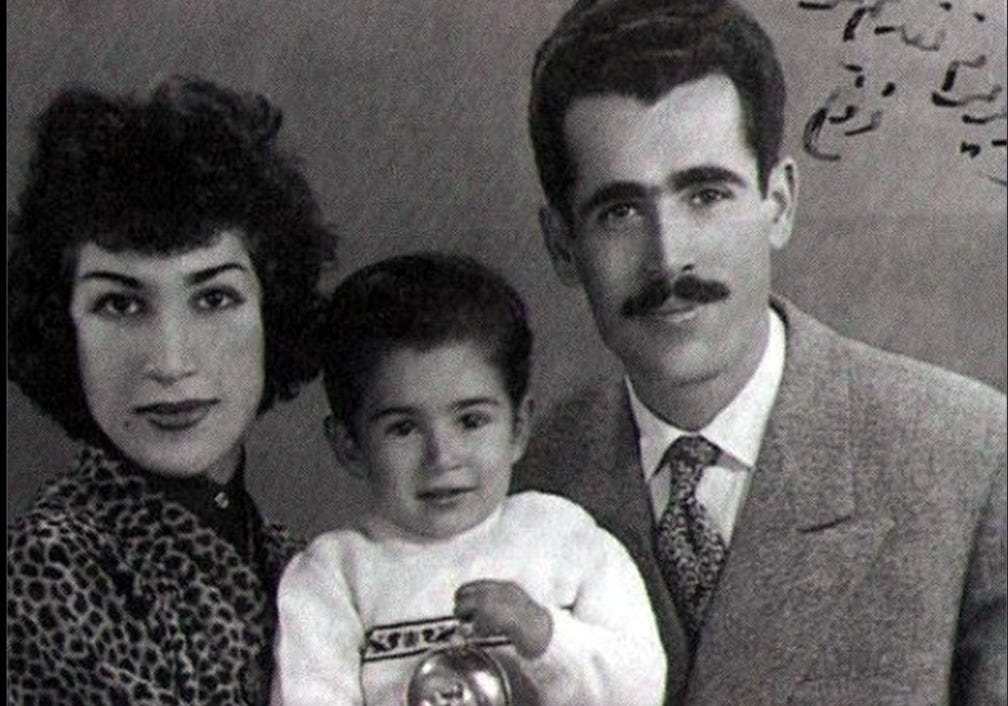
Like beautiful and famous women of today, Farrokhzad made waves not just for her art but for the vicissitudes of her romantic life. Following a stint in Europe, Farrokhzad returned to Iran and pursued an interest in filmmaking. She worked as the aide to Iranian film director Ebrahim Golestan, with whom she had a romantic relationship. During this time she made the short film The House Is Black (1963), about a leper colony in northwestern Iran. After filming concluded, she returned from the colony with a toddler boy whom she adopted. Our class was shown a screening of The House Is Black but I could barely watch it. The human suffering was unbearable.
In a letter to Ebrahim Golestsan, Farrokhzad writes:
I feel that I’ve lost my life, and I know less than I should know at the age of twenty-seven. Perhaps the reason is that I have never had a clear life. That ridiculous love and marriage at sixteen have shaken the foundations of my future life.
I have never had a guide in life. No one has educated me intellectually and spiritually. Whatever I have, I have from myself, and whatever I don’t have are those things which I could have had, but which I was barred from attaining by lack of self-understanding, by going astray, and by the impasses of life. I want to begin.
You cannot tell me that this woman, despite the specificity of her life and career, is not relatable.
Farrokhzad seemed to feel a sense of inner purpose bordering upon the spiritual. She writes in another letter, “I want to be a great poet and I love poetry. I have never had any purpose but this…Poetry is my God.”
At age 32, just as Farrokhzad’s prodigious talent was settling into a container befitting her newfound maturity, she died in a car crash.
Many broken hearts still mourn Farrokhzad. She continues to be a lauded and even iconic figure in Iran, a country that lionizes its poets and whose poetic and literary tradition has produced major figures including Rumi and Hafez.
In a New York Times obituary commemorating Forough Farrokhzad’s life, my professor was quoted explaining her significance to non-Iranian readers. She says: “I can only compare her in America to a movie star or a music celebrity, because no poet here would reach that kind of status.”
Forough Farrokhzad’s talent, glamour, and unapologetic iconoclasm certainly all contribute to her enduring public appeal. I think about her frequently, even though I can’t decode a Persian poem to save my life. Simply put, she means a lot to me.
For me, I appreciate and admire what it took for someone born into so many societal constraints to break out and insist upon living life her way, on her own terms, inclusive of all her glory and all her mistakes.
The world does not make it easy for young women—or anybody, really—to live fully as themselves. The 59th anniversary of Forough Farrokzhad’s death is this Friday, February 13. This anniversary coincides with the U.S. Department of Justice’s new release to the public of three million pages of materials related to sex criminal Jeffrey Epstein.
Public knowledge regarding the extent of Epstein’s victimization of women and girls is only growing. Men who have smugly behaved as if they know what is best for the world—Woody Allen, Bill Gates, Ehud Barak, and apparently now wellness guru Deepak Chopra, of all people—have been exposed for their intimate associations with the known operator of a global sex trafficking ring. (I actually used to listen to Deepak Chopra’s meditations, but I stopped after he said he could hear the spirit of a cow mooing while looking at a plate of beef.)
In the few emails that I could bear to read, these men—and some women—come across as utterly lost. They have forgotten that young girls are people. I’m reminded of these stanzas from Forough Farrokhzad’s “Earthly Verses”:
Men, rushing upon one another,
Would rend each other’s throats with knives
And sleep with pre-pubescent girls
In beds of blood.
They were drowned in their own fearfulness,
And the dreaded sense of having sinned
Had paralyzed
Their blind and senseless souls.
The Epstein files remind me why, in the Hebrew Bible, God admonishes kings to write their own Torah scrolls. When you have an obscene amount of material wealth and power, it is very easy to lose any moral scruples, as well as yourself.
The anniversary of Forough Farrokhzad’s death is also transpiring as the world watches the Iranian people courageously protest for their rights in the streets. Incidentally, the Islamic Republic, which came to power in 1979, banned Farrokhzad’s work during its early years.
The protests occurring now against Iran’s barbaric current leaders are in many ways a coda to the “Women, Life, Freedom” protests in Iran that started in 2022. My next guest Jonathan Harounoff, who wrote a book about these protests, will be joining us soon. The Talmud says, “In the merit of righteous women, Israel was redeemed from Egypt.” No reason the same thing can’t be true in Iran.
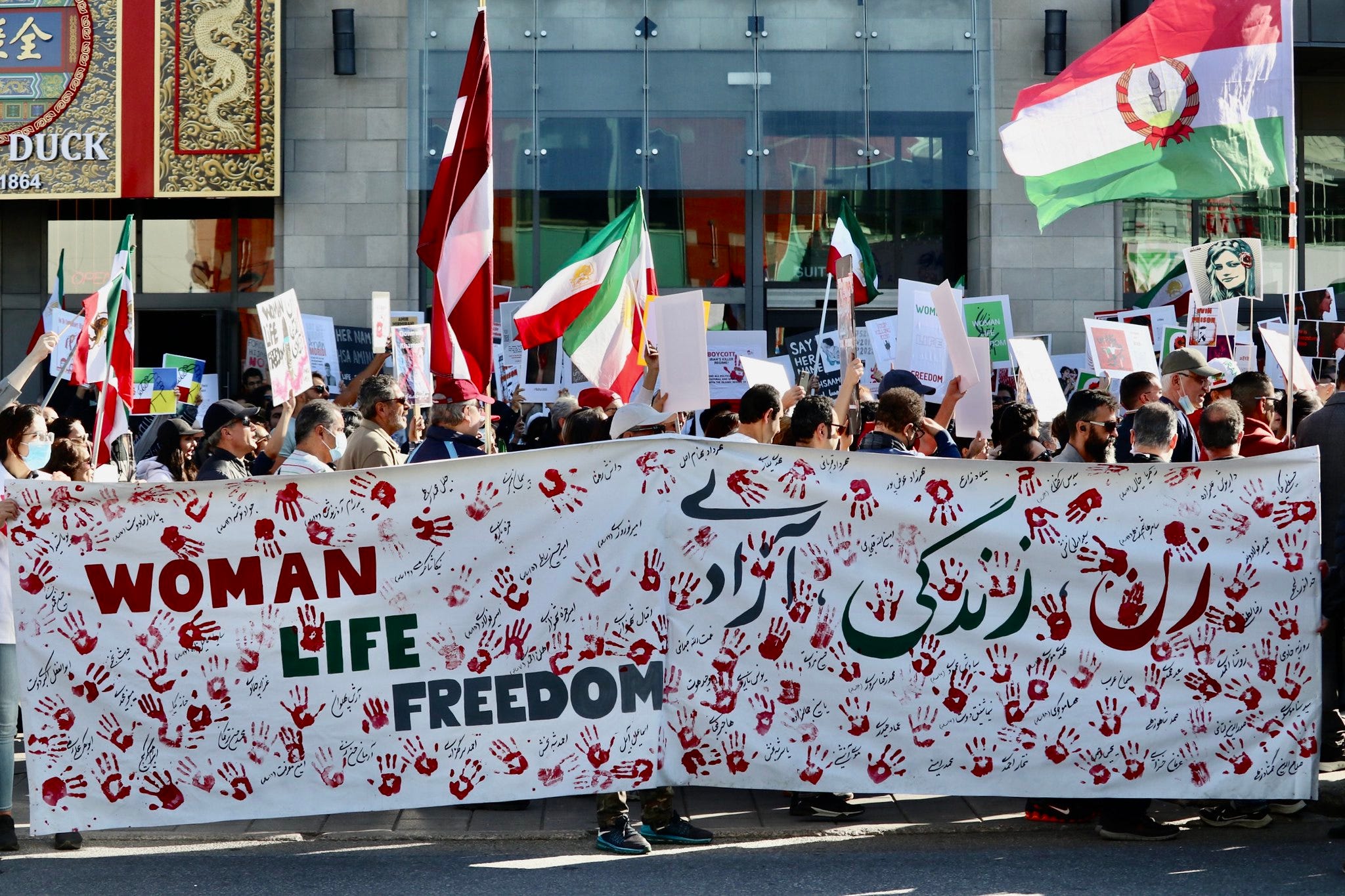
The Islamic Republic has likely killed tens of thousands of protestors. We are being told that this is the largest mass murder in Iran’s recent history. Whether or not these protests topple the regime immediately, experts are saying that the Islamic Republic is over.
Forough Farrokhzad ignited in me an ongoing interest in Iranian art and culture. Like many others, I am following these protests closely and hoping that Iranians finally install a government deserving of their great nation and heritage, a heritage that produced Forough Farrokhzad.
In one of my class’s required books about Forough Farrokhzad, I read a memorable anecdote from her childhood. Boys were urinating off the roof of a building and saying that only their male bodies could do such a thing. Forough Farrokhzad surprised them all by joining them in the same activity, right there on the roof.
Girls deserve to live big, messy lives. Actually, we all do. And a better world for women means a better world for us all. Here’s where you can read more of Forough Farrokhzad’s poetry.
Paid subscriptions allow this Substack to grow and expand. Invest in First Things First here.

I coach clients on everything from writing projects to entrepreneurial and creative ventures. If I feel right for you, visit my business website to book a session.
We are now an agency! My talented team helps clients with everything from videography to podcast production. Our typical clients want to try a new career or project and don’t know how. Does that sound like you? Write to us at info@navagrantcoaching.

She’s not a client, but you should subscribe to my friend Jasmine Dilmanian’s Substack called “Tea Time with Jasmine.” She writes about art, culture, travel…all sorts of things. It’s lovely, like her.
I reviewed “Divine Egypt” at the MET for Commonweal Magazine.