
Shoot from the Heart
Anna Wintour, Chloe Malle, and Vogue Magazine face changing cultural attitudes.

A murky transfer of power is now underway at Vogue Magazine. When the New York Times covered the changeover last year, the article’s opening stated: “Anna Wintour has surrendered the title that transformed her into a titan of fashion and publishing, and handpicked a successor—sort of.”
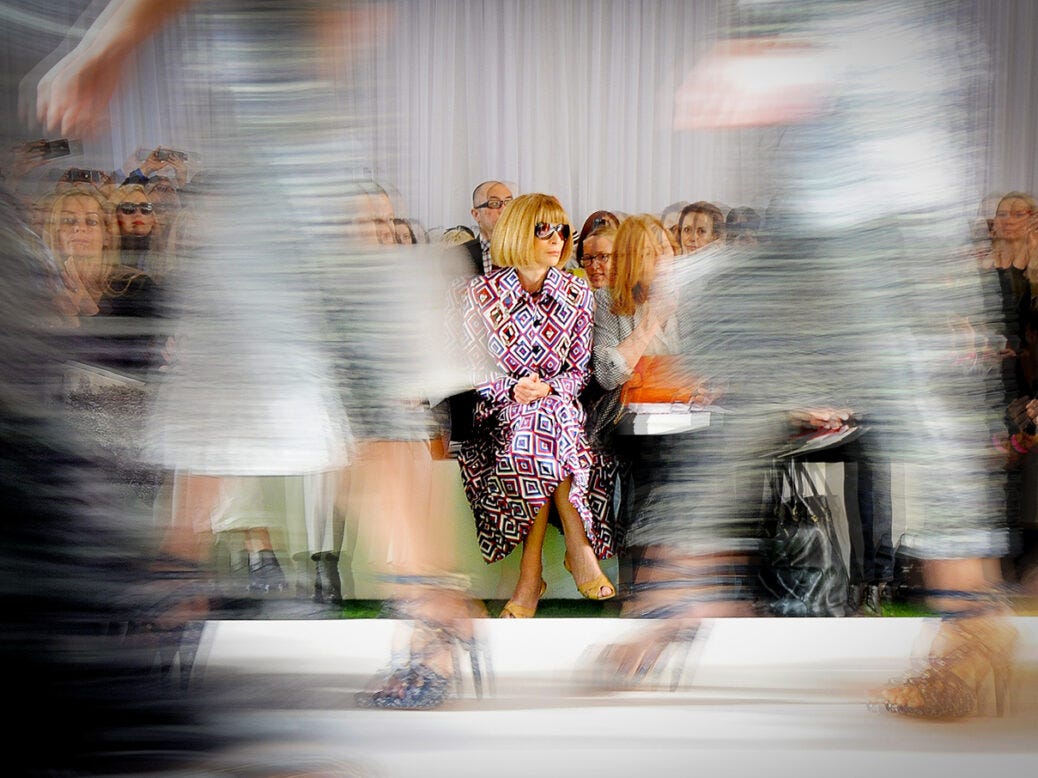
Even if you’re not a “fashion person,” you have likely seen photographs of Vogue editor Anna Wintour. Ubiquitous with her huge black Chanel sunglasses and short brown bob, Anna Wintour has been the magazine’s editor-in-chief for almost 40 years. She can frequently be seen in the front rows of fashion shows and at other celebrity-heavy events.
Famously, Anna Wintour was also satirized as the boss from hell in the hit 2006 film The Devil Wears Prada. Based on the book by former Wintour assistant Lauren Weisberger, The Devil Wears Prada depicts an abusive, cold fashion editor who provokes fear in everyone around her. “Gird your loins,” Stanley Tucci, playing a magazine executive, announces to the staff when Meryl Streep, playing Wintour, enters the office. In real life, staffers apparently nicknamed Anna Wintour “Nuclear Wintour.”
Twenty years after The Devil Wears Prada became a box-office mega-success, a sequel has now hit theaters with the film’s top stars reprising their original roles. The sequel lacks the punch of its predecessor. Culture has moved on a bit from Vogue, I think, and the magazine doesn’t feel as relevant these days. Its brand legacy is still strong but the magazine seems to matter less now.
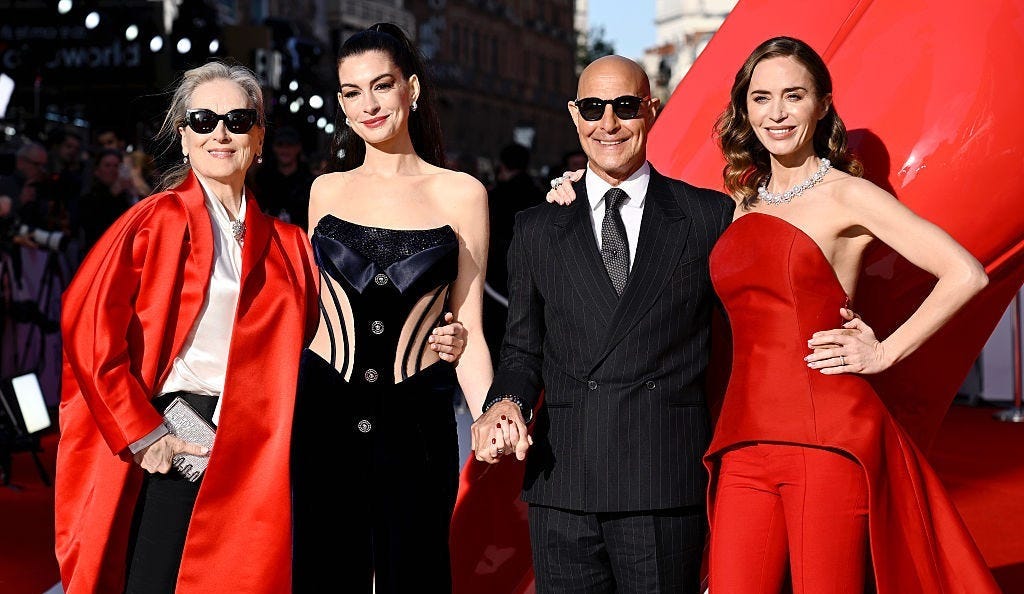
The movie sequel has arrived during an interesting time for Vogue. Last summer, Anna Wintour announced that after 37 years at Vogue’s helm, she would cease supervising the daily operations of the magazine. She also announced that longtime Vogue editor and staffer Chloe Malle, then 39 years old, would be her successor.
Almost one year later, it’s unclear how much Wintour has really stepped aside. Complications inevitably arise when a boss steps back formally but remains physically present. It was reported that Wintour wouldn’t even be leaving her office. New York Times coverage also hints at confusion surrounding Anna Wintour’s multiple titles. Apparently, once Wintour gives up her editor-in-chief title, it will be retired so that no one can ever use it again. In her promotion, Chloe Malle received the title “head of editorial content.” Malle will also continue on as Anna Wintour’s direct report.
Chloe Malle told the New York Times, “There has to be a noticeable shift that makes this mine.” Given Wintour’s long history with Vogue, that seems unlikely.
A writer by profession, Malle started working at Vogue early in her career and eventually moved up the ranks. She also co-hosts the magazine’s podcast The Run-Through with Vogue. Malle happens to come from a famous family; her mother is actress Candice Bergen.
During interviews, Malle comes across as thoughtful, kind, and smart. She also seems like a talented manager and natural leader: Malle appears sensitive to the real-life needs of the people who work for and around her. This is a person with a high emotional quotient. Clearly aiming to combat the toxic, mean-girl culture which The Devil Wears Prada made famous, Malle wrote her first editor’s letter about Ms. Frizzle, a wacky character from The Magic School Bus. Malle clearly shoots from the heart. It is a huge departure from Wintour, with her enormous sunglasses and icy reputation.
In February, the New York Times—which apparently cannot get enough of this story—published a video interview with both Chloe Malle and Anna Wintour. On the left sat Chloe Malle, in a crisp nerd-chic, light blue button-down shirt, burgundy print trousers, and low heels, with her curly brown hair styled in a middle part. On the right was Anna Wintour, with her trademark sunglasses and a double-breasted long jacket that somewhat resembled a trench coat.
Especially factoring in their body language, the interview comes off tense. They are perfect foils of one another: the eager-to-connect, openly vulnerable Malle and the completely inaccessible Wintour. Wintour says in the video that she never gets nervous, while Malle discloses that she felt nervous just minutes before the interview.
In the first moments of the interview Malle says, “Sometimes in fashion people can feel too cool, unavailable, a bit laconic. And for me, I’m just never going to be that person.” Her statement feels directed at Anna Wintour.
In turn, Anna Wintour notes that Chloe Malle isn’t “a fashion obsessive” and calls it a gift that Malle doesn’t have “too insider a view” of the industry that she has been covering for 15 years.
With one arm over her chair, Anna Wintour says, “Any great editor is going to have a strong personality.” In response we see Malle quickly look to the side in annoyance or frustration.
I am going to guess that behind the scenes, Anna Wintour is pushing Chloe Malle to develop a very personalized vision and persona—which is what Anna Wintour did as an editor. Philosophically, Malle probably doesn’t want to be that kind of editor. She probably also couldn’t if she wanted to, because fashion isn’t important to her in the way that it is for Anna Wintour. Malle comes across more as a journalist and executive who wants to raise employees’ salaries and expand the magazine’s digital imprint.
I want to quickly jump in and challenge Wintour’s assertion that all great editors must have strong personalities. I don’t agree with that viewpoint at all! I have worked with many editors, and the best ones see themselves as helpful, wise, and ideally invisible conduits between great writing and the audience for which it is intended.
Most editors aren’t making themselves the brand. Some, like Anna Wintour, do, and that’s what has made her a cultural icon. But expecting Chloe Malle to do the job in that same way feels unfair.
Vogue also isn’t what it used to be. It has garnered criticism for its shifting focus from professional models to celebrities like the Kardashians and Big Tech figures such as Amazon founder and CEO Jeff Bezos. Lauren Sanchez Bezos posed for the magazine’s cover last year in her wedding dress, and Vogue was widely criticized for catering to this mega-wealthy couple, who have few if any actual fashion bona fides. Chloe Malle actually profiled Lauren Sanchez Bezos for that issue. The Bezoses have also now taken a lead role in the Met Gala, a yearly fundraiser organized by Anna Wintour for the Metropolitan Museum of Art’s Costume Institute.
Vogue also just isn’t that fun to read, and I say that as a lifelong devotee of fashion magazines. When I am at the nail salon waiting for my manicure to dry, I’d literally rather look out the window than peruse Vogue. It just doesn’t feel as if the magazine has its readers in mind.
This whole situation got me thinking about Teen Vogue, which is sadly no longer in print. Now that was a magazine. Founded in 2003 and published in a slightly small size, Teen Vogue was just the best. It was a fashion magazine for true fashion-lovers. The models’ outfits were creative and unusual, and the featured brands were slightly aspirational and elevated but still youthful. The enclosed perfume samples for teen-focused designer scents made the whole magazine smell amazing. Real-life interview subjects were girls who were doing cool things, like completing fashion internships in Paris. It gave me a glimpse of what my future could be if I worked hard. Teen Vogue also featured real-world reporting but in a way that was age-appropriate and respectful of adolescent readers’ intellects without being ideological. The magazine was luxurious and upscale, but not impossibly far away from my reality.
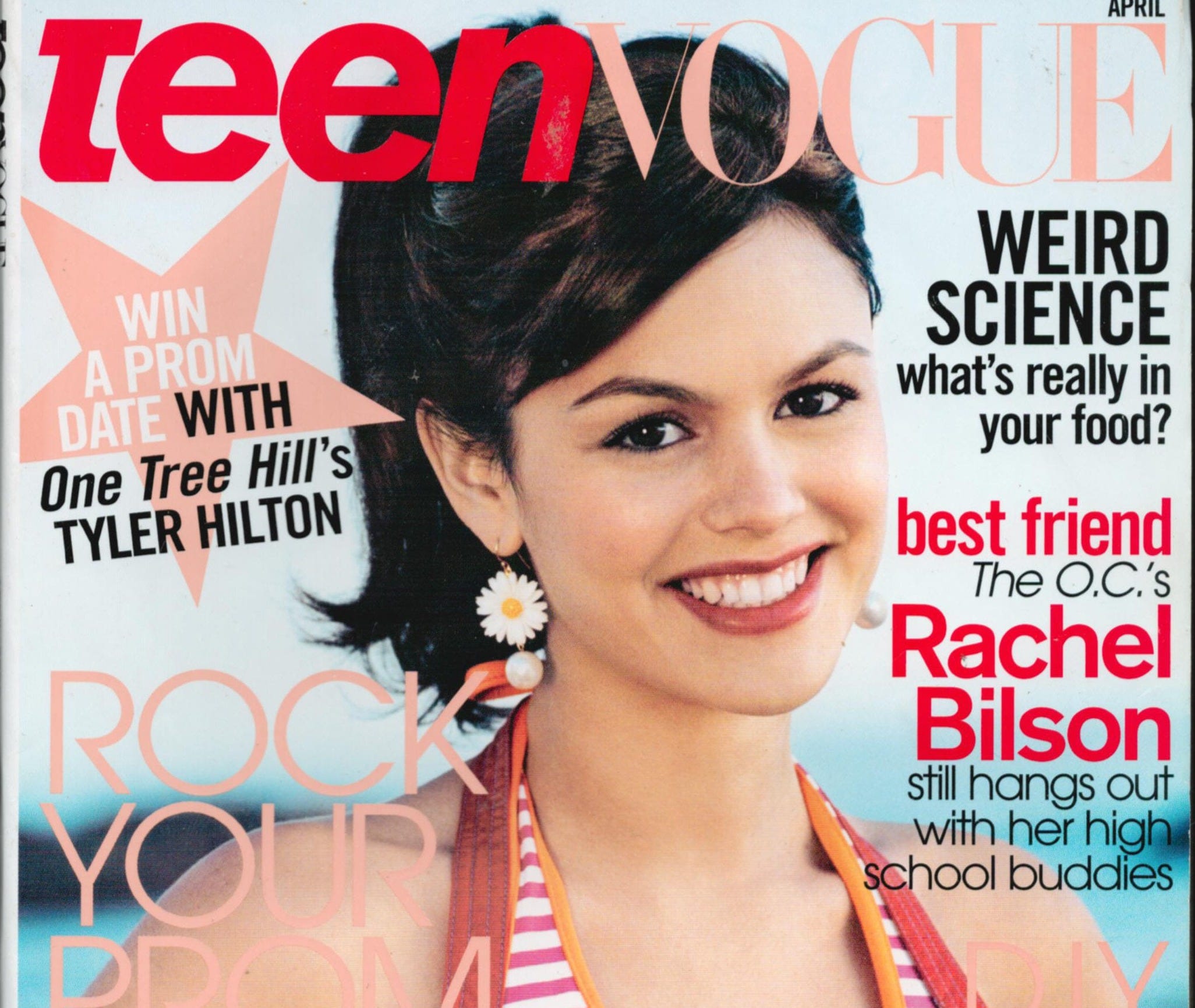
When I was a subscriber, the editor of Teen Vogue was Amy Astley, who now oversees Architectural Digest. In her letters to readers at the beginning of each issue—I can still remember them—she treated us with respect. She told us which articles in each issue had moved her, and what she hoped each reading experience would provide for us. Even as a teen I could feel the esteem coming from this adult who was helping make this magazine so special for us. In her photos she always had blond bangs and she was smiling.
Because of the way her signature looked on the printed page, I actually misremembered Amy Astley’s name as Ann. But that’s my point: I don’t really remember who the editor was, only that she did a really good job.
In The Devil Wears Prada 2, Meryl Streep, reprising her role as an evil fashion boss, tells her former assistant—who has returned as an editor—that she will inevitably fail. In a video clip of Chloe Malle and Anna Wintour at Paris Fashion Week, Wintour is speaking emphatically to Malle as they walk together. Malle looks stressed, beaten down, and angry—her jaw is literally rippling. Without context, comparisons to The Devil Wears Prada can easily be conjured.
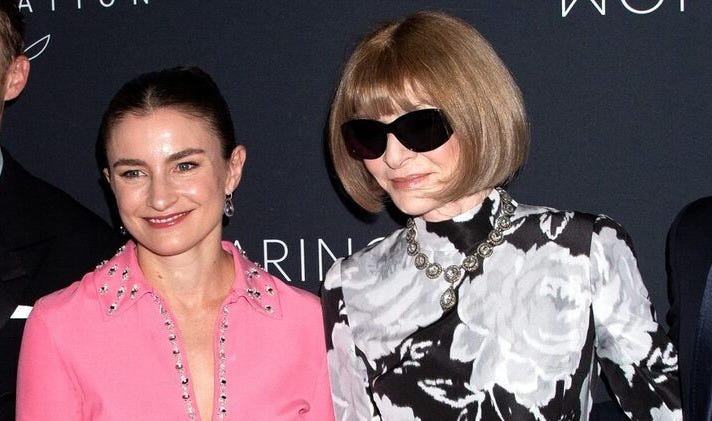
We have no idea what their relationship is really like. For all we know, Anna Wintour was telling Chloe Malle the Knicks score. (Sorry, I meant the Mets!) Wintour could be the best mentor in the world—who knows. Even in the best circumstances, however, when you are replacing someone who is still physically present, you are going to feel constantly evaluated. It’s going to be very difficult to do your job. It’s also going to be hard to make decisions that you know your predecessor would disagree with, especially if you are someone like Malle, a bridge-builder who seems in-tune with the emotions of others. This type of situation will also introduce confusion and uncertainty among staff about who is really in charge. Or maybe it’s not uncertain at all, if Wintour is still running things.
I have found myself in multiple personal and professional situations wherein people didn’t want to cede authority to me even though it was mine. I know I am in that type of dynamic when making a decision that should be easy feels scary because someone might intervene.
In life, power clashes are part of the game. While powerful people are digging into their usual playbook of ego and control, disempowered people are often busy self-flagellating about how passive they are and over-analyzing every encounter to see if they are assertive enough.
When a bullied person stops needing what a bully has or represents, that’s when things change. When it stops being scary to verbally confront a bully—since a confrontation may lead to the end of the relationship—the balance of power finally shifts. When your anger eclipses your fear, that’s when you can detach. In such a situation, the only way to “win” is to leave.
When Anne Hathaway, playing the tortured assistant in The Devil Wears Prada, is finally about to quit, her boss famously tells her, “Everybody wants this.” Breaking away from a dynamic in which you are disempowered requires not wanting “this” anymore.
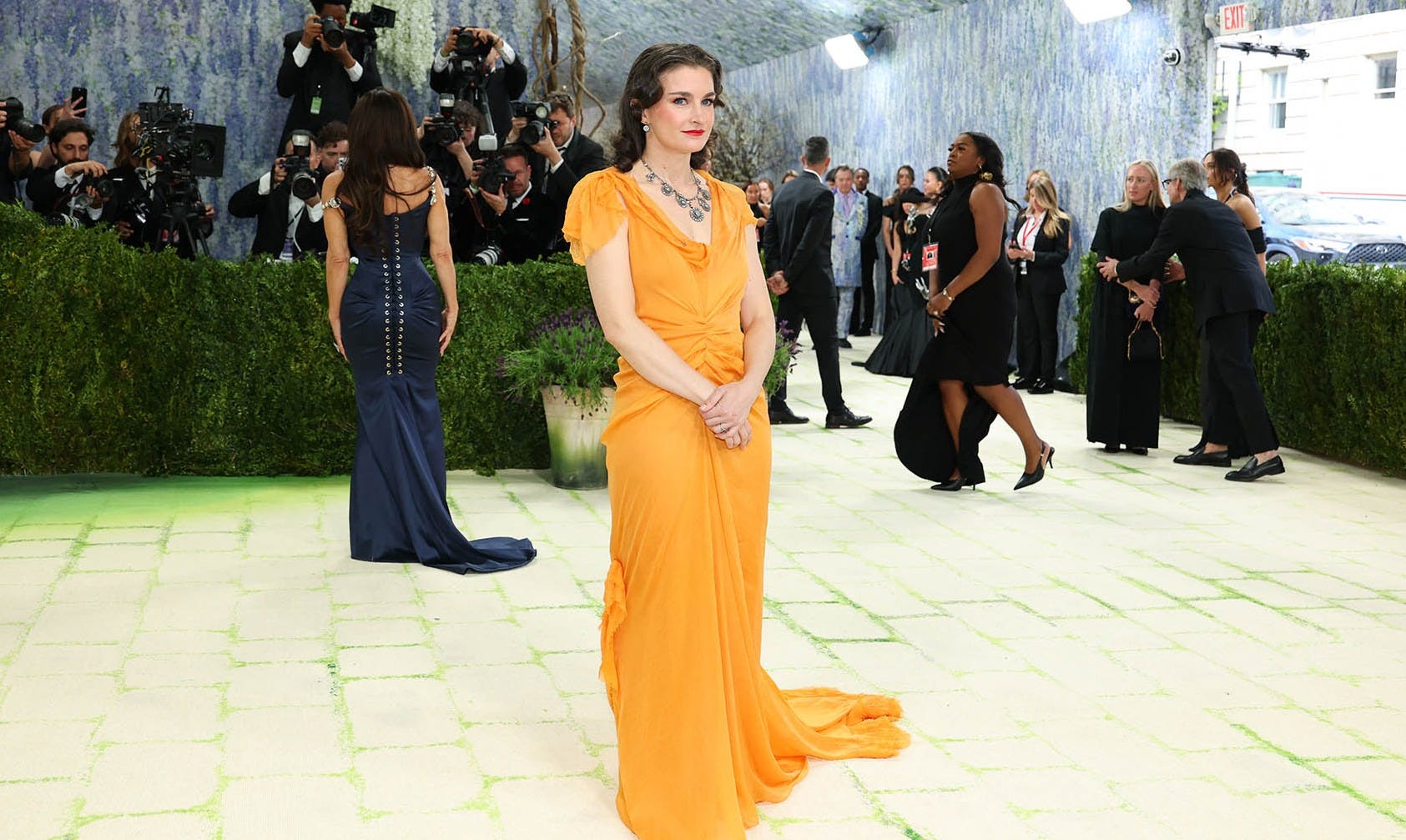
At this year’s Met Gala, Chloe Malle arrived in a saffron-yellow Colleen Allen gown meant to invoke the ethereal 1895 pre-Raphaelite painting Flaming June by Sir Frederic Leighton. The dress was delicate and asymmetrical. In keeping with her nerd-chic, librarian-esque dressing style, Malle was dutifully observing the gala’s 2026 dress code of “Fashion Is Art.” Many celebrities—Wintour included—tend to ignore the theme.
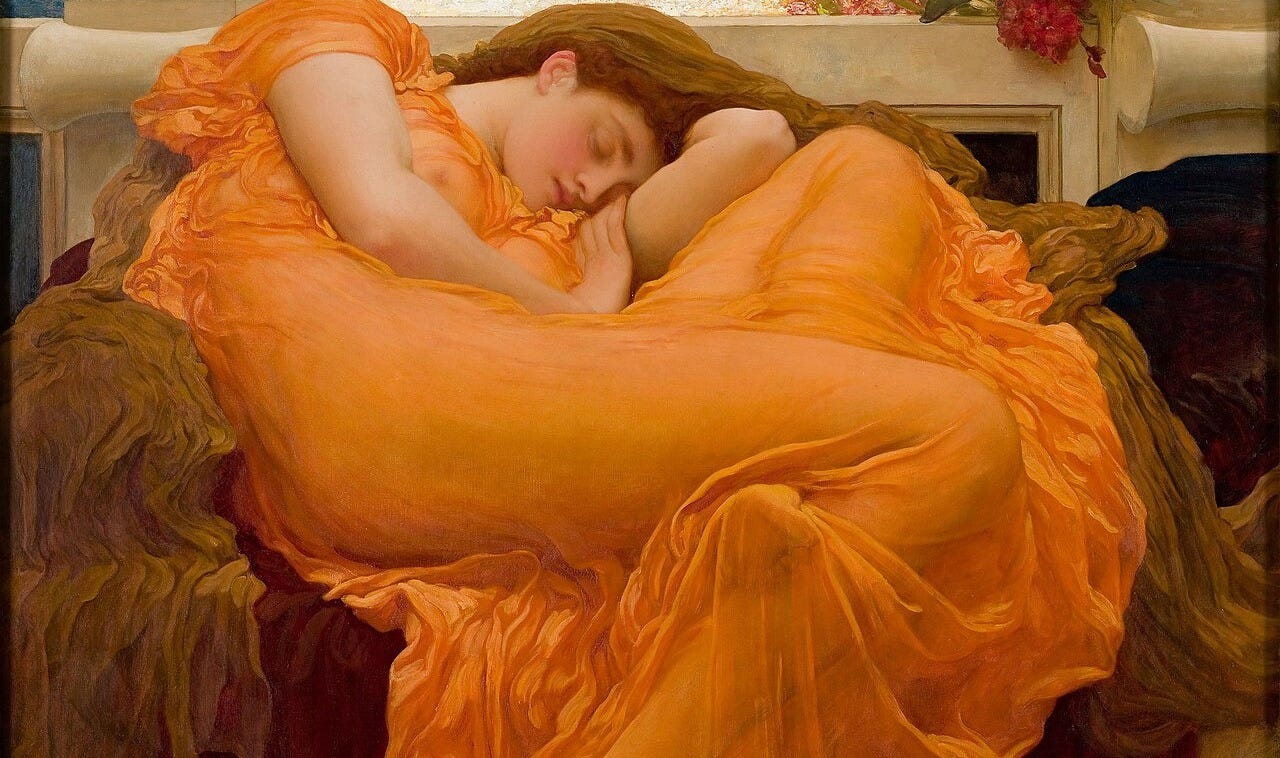
Malle posed for photos alone on the red carpet. In contrast with previous Met Gala photos I saw where Malle looked relaxed and happy, this year she looked restrained, maybe burdened. It was a nice dress but the cameras caught Malle in a less confident pose. Fashion is often about attitude, and on-the-job stress can make summoning one’s internal fierceness hard.
In a photo of Vogue staffers, Malle, in her bright yellow dress, stands at the very front and center. Anna Wintour stands to her side. Yet even that photo somehow still visually centers Wintour, because all viewers register is the visual surprise of seeing Malle in “her” place. Malle’s rolled-forward posture conveys the awkwardness. Imagine how tough it must be to occupy a place that is rightfully yours, while your predecessor is right there, all of the time.
I do think that some critiques of Malle’s approach are fair. I think Malle has a cool and textured dressing style, but I don’t really want to read about nerdy Ms. Frizzle in Vogue. Fashion should be aspirational, I think. However Malle is new in the role and she needs time to develop her vision—not as a brand icon, but as an editor.
At the same time, I have no idea what Teen Vogue’s former editor Amy Astley was wearing to work each day. She obviously, however, knew enough about fashion and her readership to put out a product that I still, from the bottom of my heart, treasure and adore many years later.
Chloe Malle deserves a chance—a real one—to be the editor she wants to be. And she deserves to be a boss who shoots from the heart and runs the place her way. Maybe I’ll actually read Vogue if she remakes the product into something new.
Paid subscriptions allow this Substack to grow and expand. Invest in First Things First here.
I coach clients on everything from writing projects to entrepreneurial and creative ventures. If I feel right for you, visit my business website to book a session.
We are now an agency! My talented team helps clients with everything from videography to podcast production. Our typical clients want to try a new career or project and don’t know how. Does that sound like you? Write to us at info@navagrantcoaching.
Watch Carla Tanz’s (New York, NY) incredible new brand video!
I almost get the sense that Anna Wintour didn’t pick Chloe Malle herself, despite all the reports saying otherwise, and isn’t 100% on board with this change. At some point, the old guard will need to step back and let a new generation of leaders take the helm, and it’s clear that Vogue has an understanding of this at least in theory, but it very much seems like they’re not ready for that to be reality.